Cabin Renovations in the Smokies That Actually Raise Rental Income
Every dollar that goes into a rental cabin does one of three things. It keeps you legal, it raises what you can charge, or it makes you feel good about the cabin. Only the first two show up on a statement. This is our honest read on cabin renovations in the Smokies from the revenue side: what moves the nightly rate and the reviews, what does not, and where the safety work fits in. It comes from LoneStar Installations LLC, and it is written for owners deciding where a limited budget should go.
Cabin renovations in the Smokies start with the work that keeps you legal
Nothing in this section raises your rate. All of it decides whether you have one. Interconnected smoke alarms on every level, wired so one sets off the rest. Carbon monoxide detectors within fifteen feet of every sleeping area. A 2A:10BC extinguisher on each floor with a current annual tag. A second way out of every sleeping room, either a window sized for egress or a door to the outside. Evacuation maps by the main exits. Hallways and stairs kept clear.
Do this work inside the remodel, while the ceilings are open and the electrician is already on site. It is the cheapest it will ever be at that moment. Confirm current requirements with the Fire Marshal who covers your parcel, because the details change.
The thirteenth guest, and the math behind it
Going from twelve guests to thirteen moves a cabin into a different risk category in Tennessee, and in most cases that means a full sprinkler system installed by a licensed fire contractor. Size can trigger the same thing on its own: more than five thousand square feet, or more than three stories. Unincorporated Sevier County also adds a per-guest permit fee for every occupant above twelve.
So run the numbers before you draw plans. Pull comparable listings for ten-guest and fourteen-guest cabins in your area and look at what they actually book for, not what they list for. Put the sprinkler system, the higher fees, and the lost weeks of construction on the other side of the page. In our experience the fourteenth guest seldom pays back the system that lets you host them. If the math works for your cabin, get a written determination from the Fire Marshal first. If it does not, build the best twelve-guest cabin on the road.
Kitchens: what guests pay for
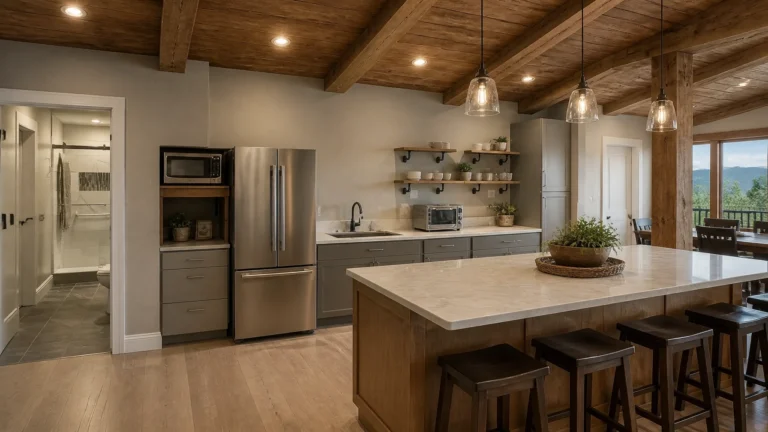
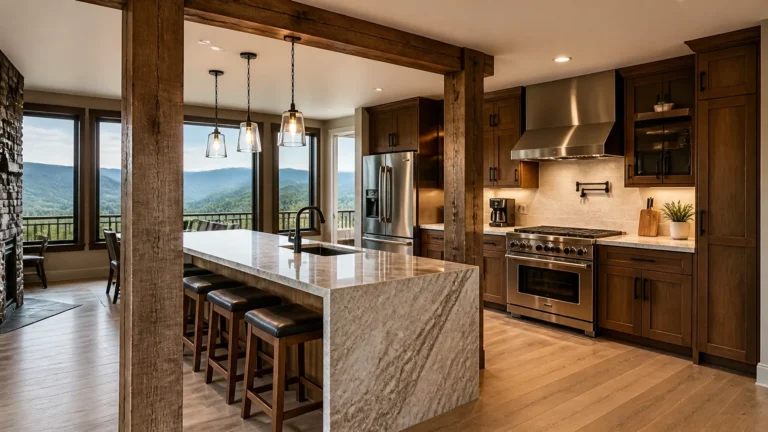
Guests pay for a kitchen that a big group can cook in together. That means a layout opened up to the living space, enough counter to set out food, and light. Recessed LED fixtures instead of one dim ceiling dome. Quartz or granite that survives a hot pan and a cutting board. Shaker cabinets in white or gray. Stainless appliances that match each other. Wood-look vinyl plank on the floor, and no carpet anywhere near a sink.
What they do not pay for: a decorative range hood, a wine cooler, custom tile behind the stove, or cabinet hardware that costs more than the faucet. Those show up in your photos and nowhere in your reviews.
Bathrooms: the room that writes the review
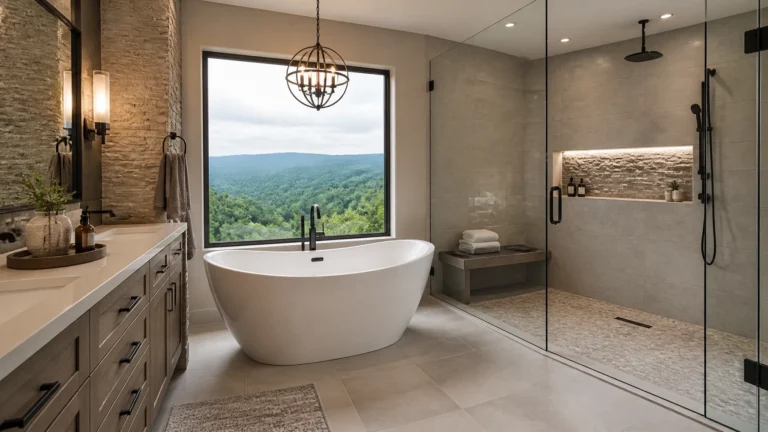
Nothing else in a cabin gets mentioned in reviews as often. The upgrade that earns: a tiled walk-in shower with a glass enclosure in place of the old tub, a rainfall head, faucets and hardware in one finish (matte black and oil-rubbed bronze both photograph well), and a vanity with real storage and a stone-look top that matches the kitchen.
The part that earns without being seen: while the walls are open, check the rough-in plumbing and fix any leak before the tile goes on, and make sure the exhaust fan vents outdoors, not into the attic. A cabin is a wood building. Moisture that gets into the framing costs more than any finish you picked.
What rarely earns: a second tub, or a whirlpool that most guests skip and every cleaner has to scrub. Nice to have. Not why they booked.
The numbers to run before you start
Four numbers decide whether cabin renovations in the Smokies pay back. Run them before you sign anything.
- Nightly rate. Pull twelve months of your own data, then comparables that already have the upgrade you are considering. The gap between them is your ceiling.
- Off-season occupancy. Updated kitchens and bathrooms tend to move winter and midweek bookings more than peak weeks, which sell anyway.
- Carrying costs. Ask the Sevier County Property Assessor how a cabin that is not your primary residence is classified. The assessment can differ from a home you live in, and it belongs in the math.
- Downtime. Every week the cabin is closed is revenue gone. Sequence the work so trades overlap instead of waiting on each other, and block the calendar once, not three times.
What we tell owners
On cabin renovations in the Smokies, put the safety work first so it is never the reason the calendar stays closed. Spend on bathrooms, then the kitchen, then the deck guests eat on. Leave the vanity items until the rate says you can afford them. And after the renovation, keep the cabin at the standard the photos promise, because reviews get written on the second stay as much as the first.
That last part is what the LoneStar monthly inspection and maintenance program is for. Owners and property managers get one scheduled visit a month around the booking calendar, a photo-documented walkthrough of decks, railings, showers, tile, plumbing, roof, exterior wood, filters, and seals, small fixes done on the spot, and a report after every visit. When you are ready to plan a renovation, contact LoneStar to schedule a site visit.